

The Rolex Oyster Perpetual has traditionally been considered the simplest model in the brand’s catalog. It offers only hours, minutes, and seconds display, without complications such as a date function or additional mechanical features. However, despite its minimalist design, the Oyster Perpetual has always maintained the same core standards as other Rolex collections in terms of reliability, water resistance, and movement quality.
In 2026, as the Oyster case design celebrates its 100th anniversary, Rolex introduces a significant evolution of the Oyster Perpetual line. The new models mark the first time precious metals are integrated into the collection at this level, signaling a notable shift in positioning and perception.
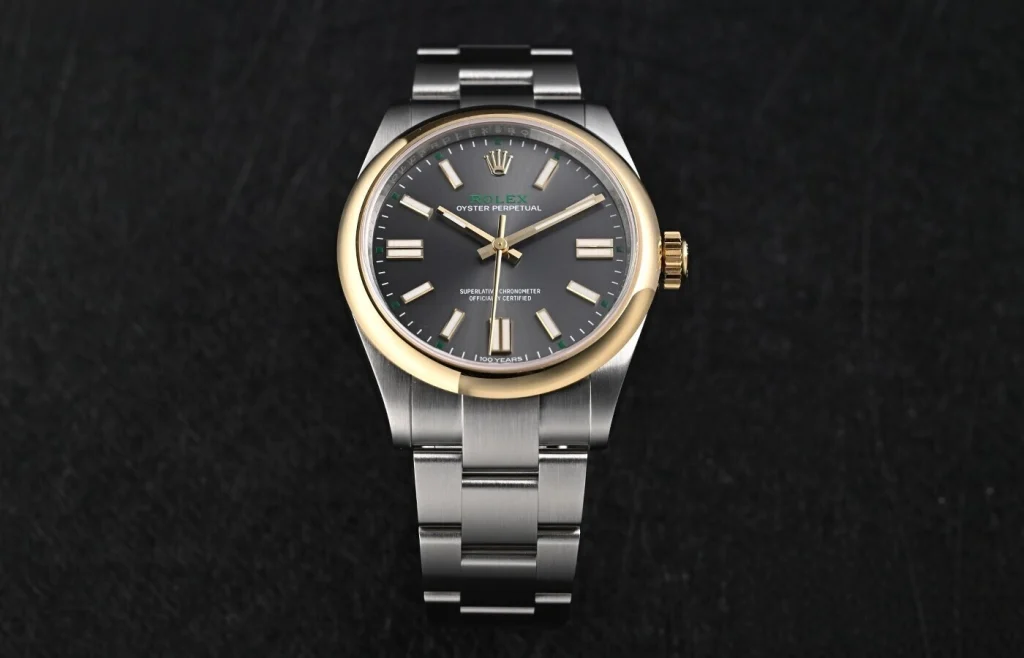
A Major Shift in the Oyster Perpetual Line
Over the years, the Oyster Perpetual has served as the foundation of Rolex’s catalog. It is often seen as a “pure” watch design—clean, functional, and stripped of unnecessary complexity.
While the design philosophy remains unchanged, the 2026 update introduces gold and two-tone constructions, moving the collection closer to the luxury positioning of higher-end Rolex models.
Key new references include:
- 41mm anniversary model (Ref. m134303-0001)
- 28mm full gold version (Ref. m276208-0002)
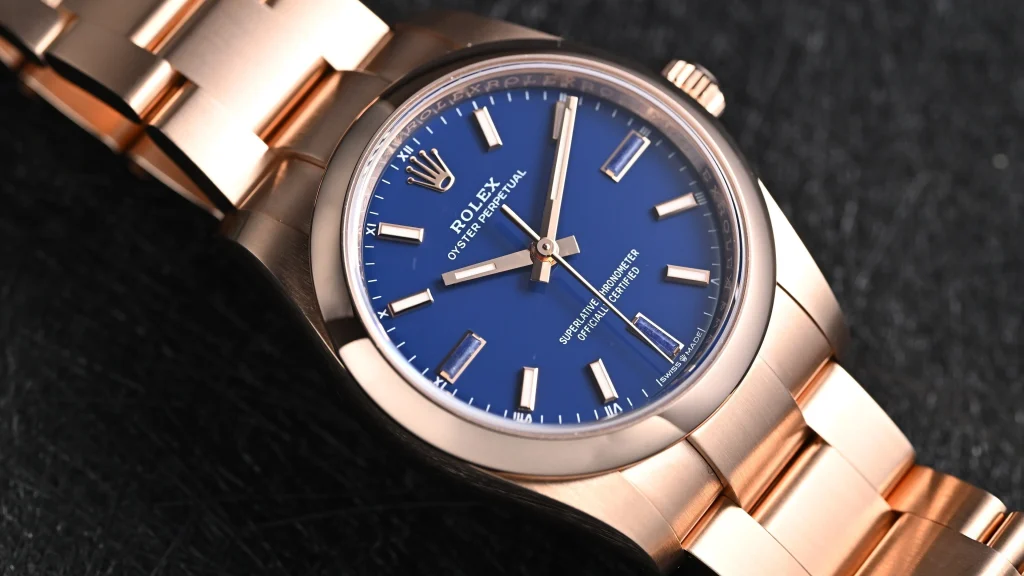
- 34mm Everose gold version (Ref. m124205-0002)
Among them, the 41mm version is particularly significant as it represents a centenary edition tied to the 100-year history of the Oyster case.
The Oyster Case Heritage
The name “Oyster” originates from Rolex’s patented waterproof case design, introduced in 1926. This innovation became one of the brand’s defining technical achievements, forming the foundation of nearly all modern Rolex sports and dress watches.
Today, the Oyster case continues to represent durability, water resistance, and structural integrity across the entire Rolex lineup.
From Entry-Level to Luxury Positioning
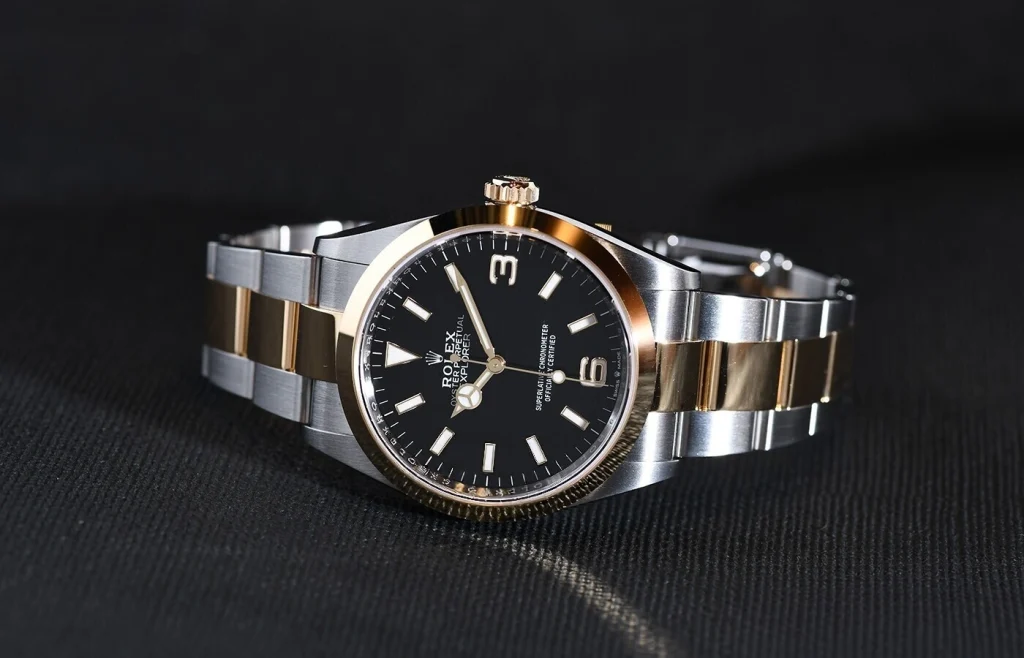
Traditionally, the Oyster Perpetual sat alongside Rolex’s entry-level sports lineup, often compared with models such as the Explorer, Air-King, and Milgauss. While the Milgauss has now been discontinued, the broader category of “entry sports watches” has evolved over time.
However, Rolex officially categorizes the Oyster Perpetual as part of its classic watch segment rather than a sports model. This distinction becomes more important in 2026, as the collection begins to adopt precious metals and more refined visual elements.
As a result, the Oyster Perpetual is no longer easily defined as a simple entry-level model in the traditional sense.
Design Updates in the 2026 Anniversary Model
The 41mm anniversary edition introduces several notable design changes.
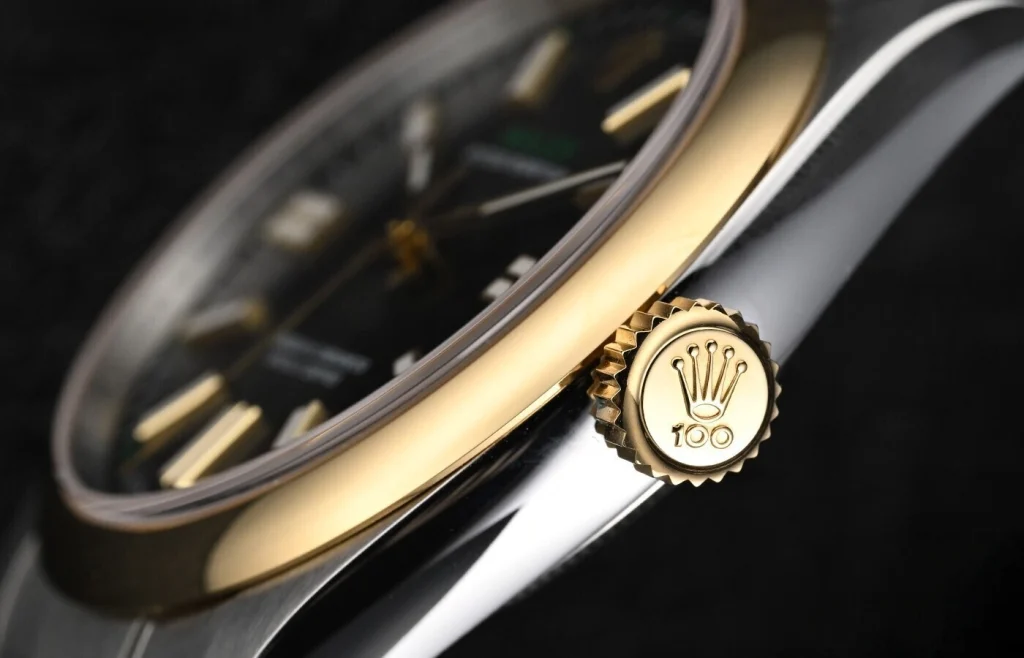
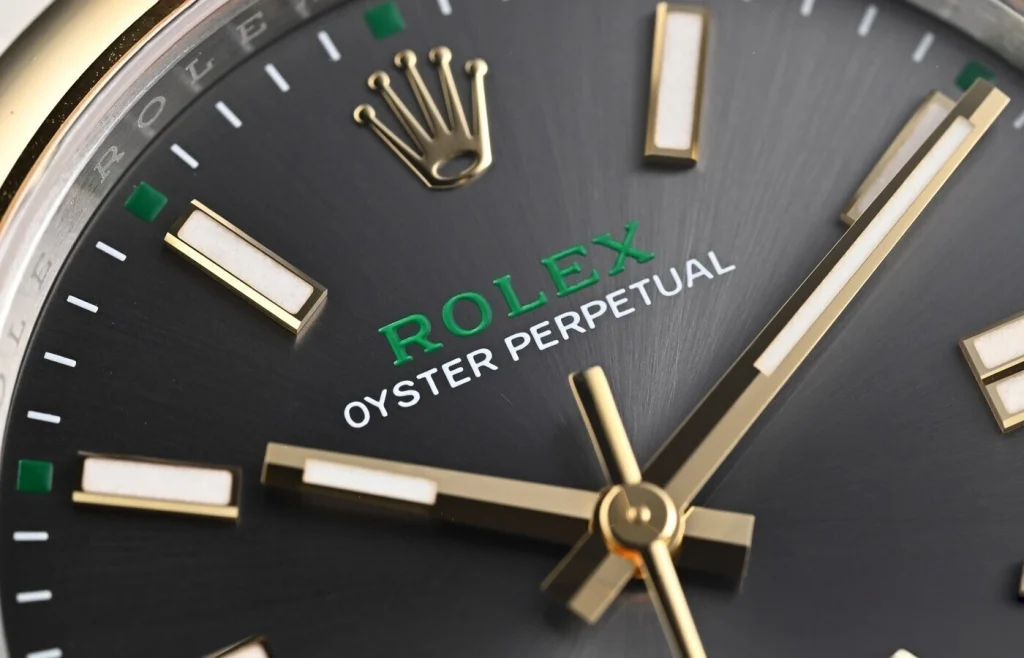
The case middle is still made from Oystersteel, maintaining structural continuity with previous generations. However, the crown is now crafted from gold and features engraved details, including a commemorative “100” marking on the crown top.
The bezel also incorporates gold elements, alongside gold hands and hour markers on the dial.
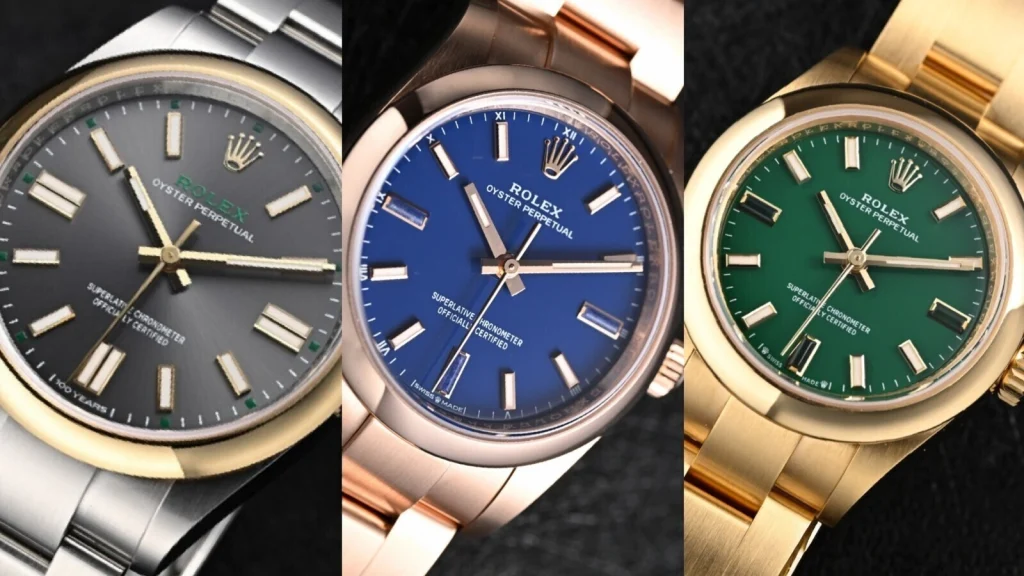
Unlike standard lacquer dials used in earlier Oyster Perpetual models, the anniversary version features a grey-black sunray dial finish. This design choice creates a more traditional aesthetic, reminiscent of earlier Oyster Perpetual references.
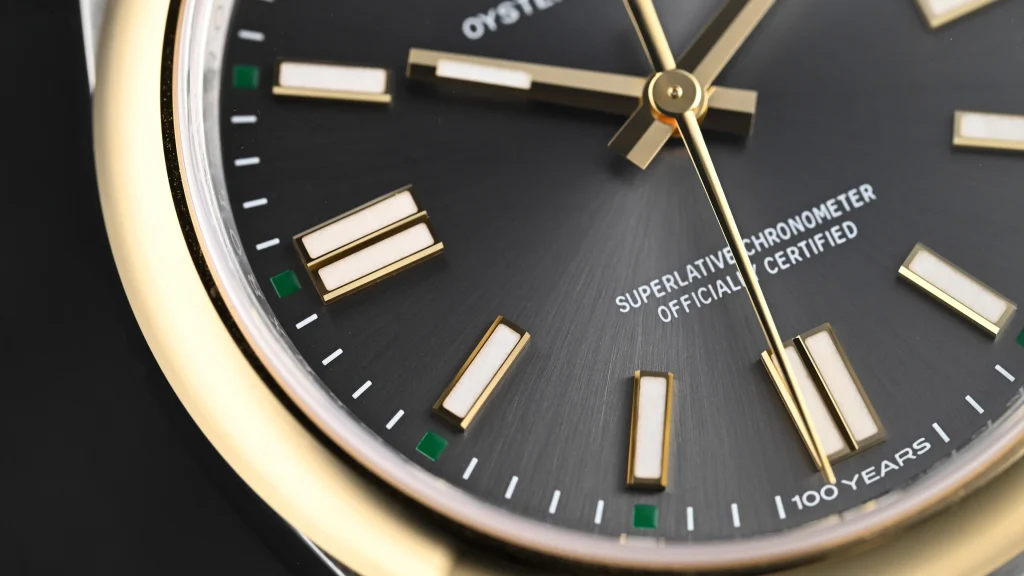
Additional design highlights include:
- Green “ROLEX” lettering on the dial
- Green minute track accents
- A commemorative “100 YEARS” inscription at 6 o’clock, replacing the usual “SWISS MADE” text
These details emphasize the watch’s role as a centenary celebration piece rather than a standard production model.
Movement and Technical Upgrades
The 2026 Oyster Perpetual anniversary model is powered by the Rolex Caliber 3230 movement. This is one of the brand’s most widely used modern calibers, offering a power reserve of approximately 70 hours.
The movement includes several proprietary Rolex technologies:
- Paraflex shock absorption system
- Chronergy escapement
- Parachrom hairspring with anti-magnetic properties
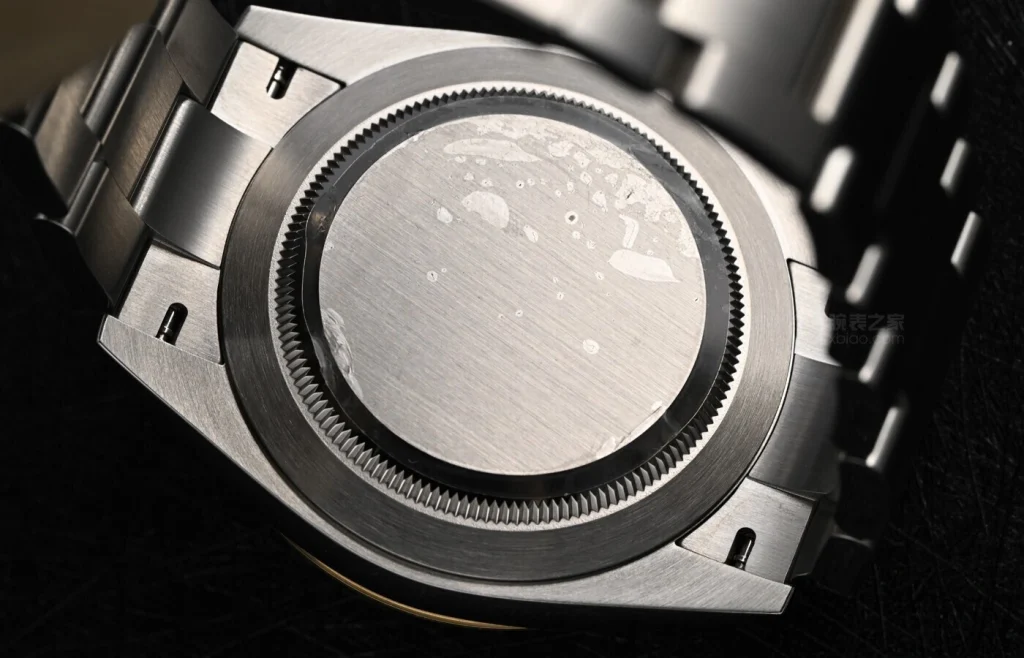
These components are designed to improve resistance to shocks, temperature variations, and magnetic fields, ensuring consistent performance in daily wear conditions.
The smaller 28mm and 34mm models use the Caliber 2232 movement, which offers a reduced power reserve of around 55 hours due to its smaller size. It features Rolex’s Syloxi silicon hairspring, designed to enhance resistance to magnetism and temperature changes.
Precious Metal Expansion in the Collection
One of the most significant changes in 2026 is the introduction of precious metals into the Oyster Perpetual lineup.
- The 34mm model is crafted in 18K Everose gold and paired with a blue lacquer dial.
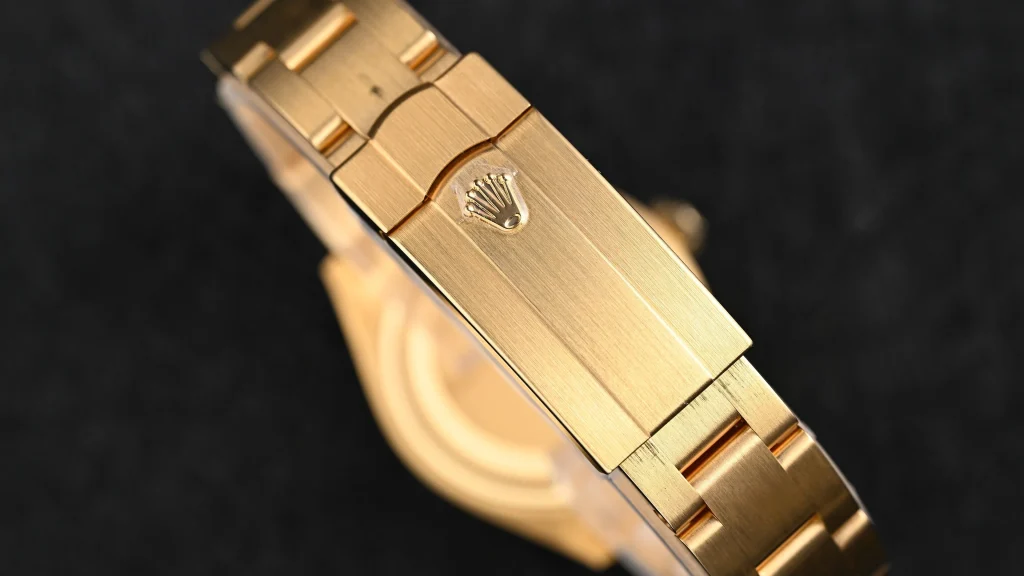
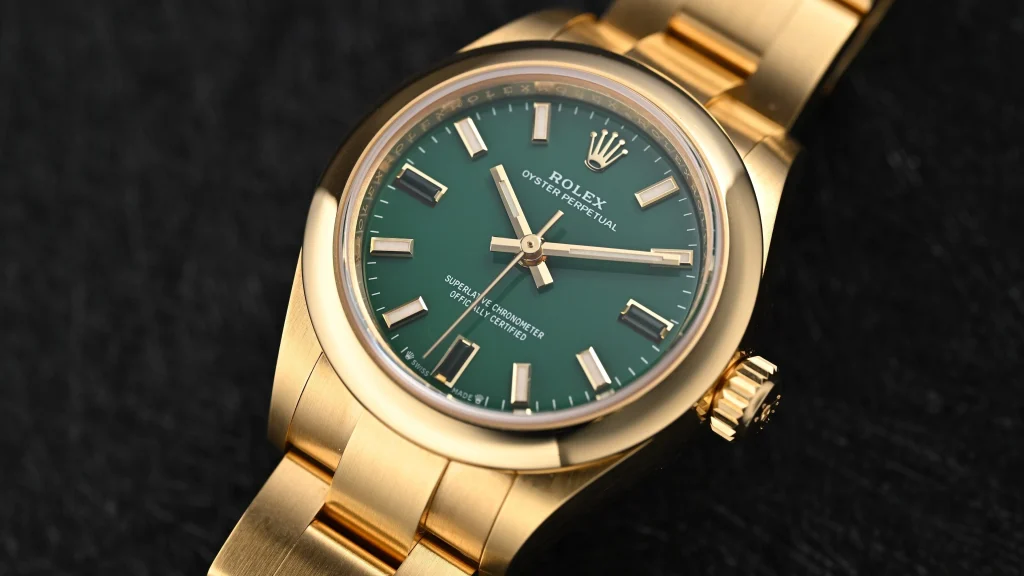
- The 28mm version is made in 18K yellow gold and features a green dial.
Unlike the anniversary model, these versions do not include the “100 YEARS” marking on the dial or crown, clearly separating them from the commemorative edition.
This expansion into precious metals represents a clear repositioning of the collection within Rolex’s overall lineup.
Movement Architecture
All three models feature solid case backs and in-house Rolex movements.
The 41mm anniversary model uses the Caliber 3230, while the smaller models rely on the Caliber 2232.
Key differences include:
- 3230: 70-hour power reserve, larger architecture
- 2232: 55-hour power reserve, compact design
Both movements are equipped with modern Rolex technology designed for stability, accuracy, and long-term durability.
A New Identity for the Oyster Perpetual
With the introduction of gold elements, anniversary markings, and updated design language, the Oyster Perpetual in 2026 is no longer easily categorized as a basic entry-level Rolex.
Instead, it now occupies a more flexible position within the brand’s lineup—bridging simplicity, heritage, and increased luxury appeal.
As Rolex celebrates 100 years of the Oyster case, the collection reflects not only technical evolution but also a clear shift in brand positioning.
The Oyster Perpetual is no longer just a simple time-only watch. It has become a modern interpretation of Rolex’s foundational design philosophy, elevated through materials, craftsmanship, and historical significance.